
Technology OEM vendors and their channel partners who sell software subscriptions would want renewals to be simple and hassle-free. In fact, they would like it to be a ‘non-event’. To achieve this, they must demonstrate the value of their software. They must show how it ties to customer business outcomes during the adoption phase that achieves customers preferred IT metrics. This involves ongoing engagement with customers during onboarding and adoption phase helping customers realize full value of the solution. Reducing customer churn and renewals risk is the key goal to be achieved.
Three years back, my team was tasked to enable our channel partners to drive continuous engagements with their customers. This was during the adoption phase of the product lifecycle. Our strategy was to enable ours partners to create value-driven and differentiated services for customers. These services were closely tied to customer use cases. They were also tied to technical outcomes. Unlike traditional services, these services (a.k.a accelerators) were smaller in scope and treated as solution-boosters designed to speedup the implementation and adoption of the product. These services also allowed partners to monetize depending on the value it created for customers.
The Challenge
Our key challenge was to help each partner differentiate their services with their unique intellectual property among hundreds of other partners they are competing with. This required us develop a engagement methodology where innovation was at the core. We adopted a user centred approach that brought partner cross-functional teams together to ideate and create these new class of services.
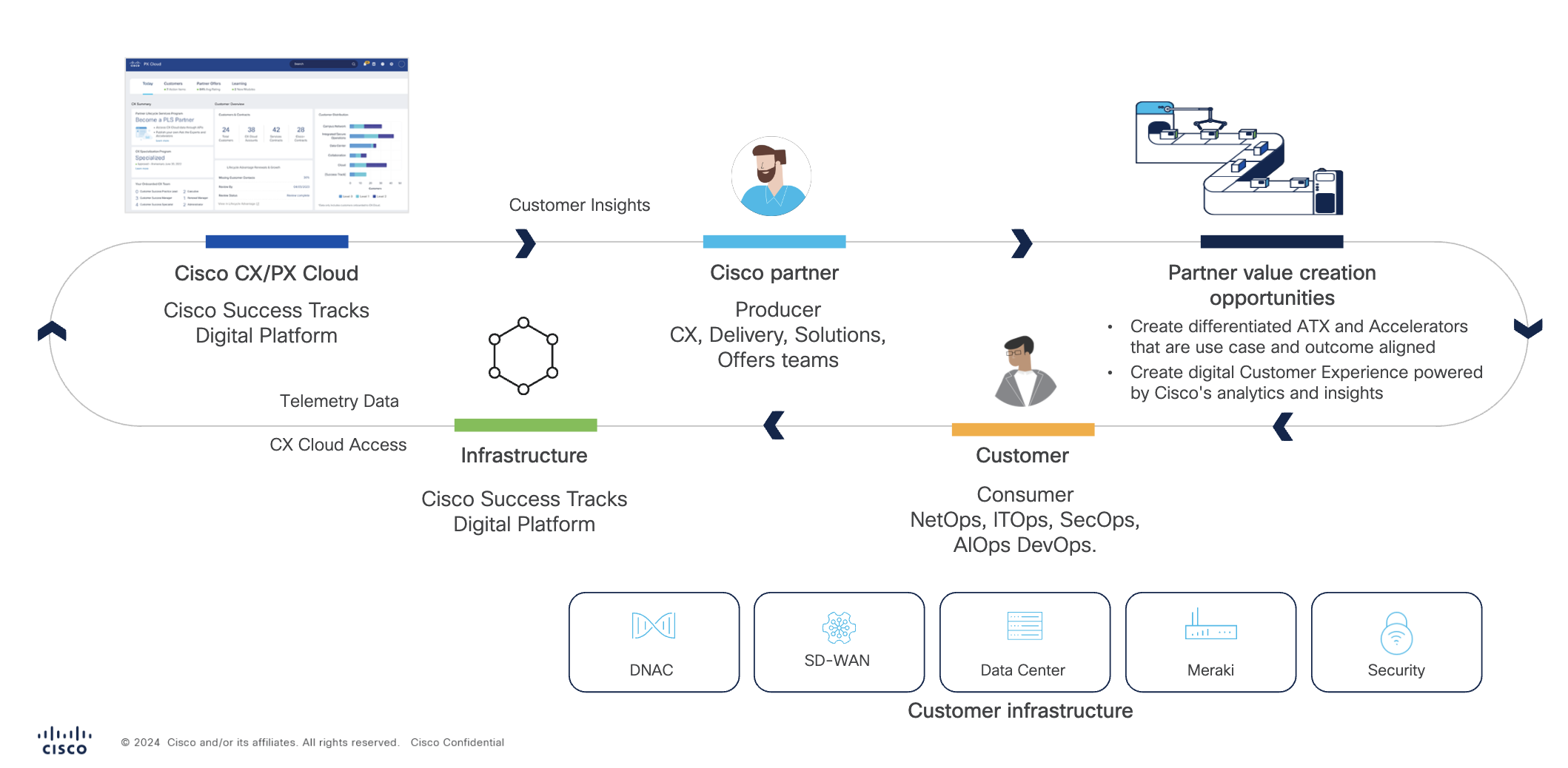
Lets take a step back and look at the below partner value creation model. Telemetry data from customer network infrastructure is informing and empowering the partner. This helps them create value-based services for their customers during the adoption and expansion phase of the product lifecycle. Without insight from the customer infrastructure it would be difficult to develop new services.
The Partner Team (Creators)
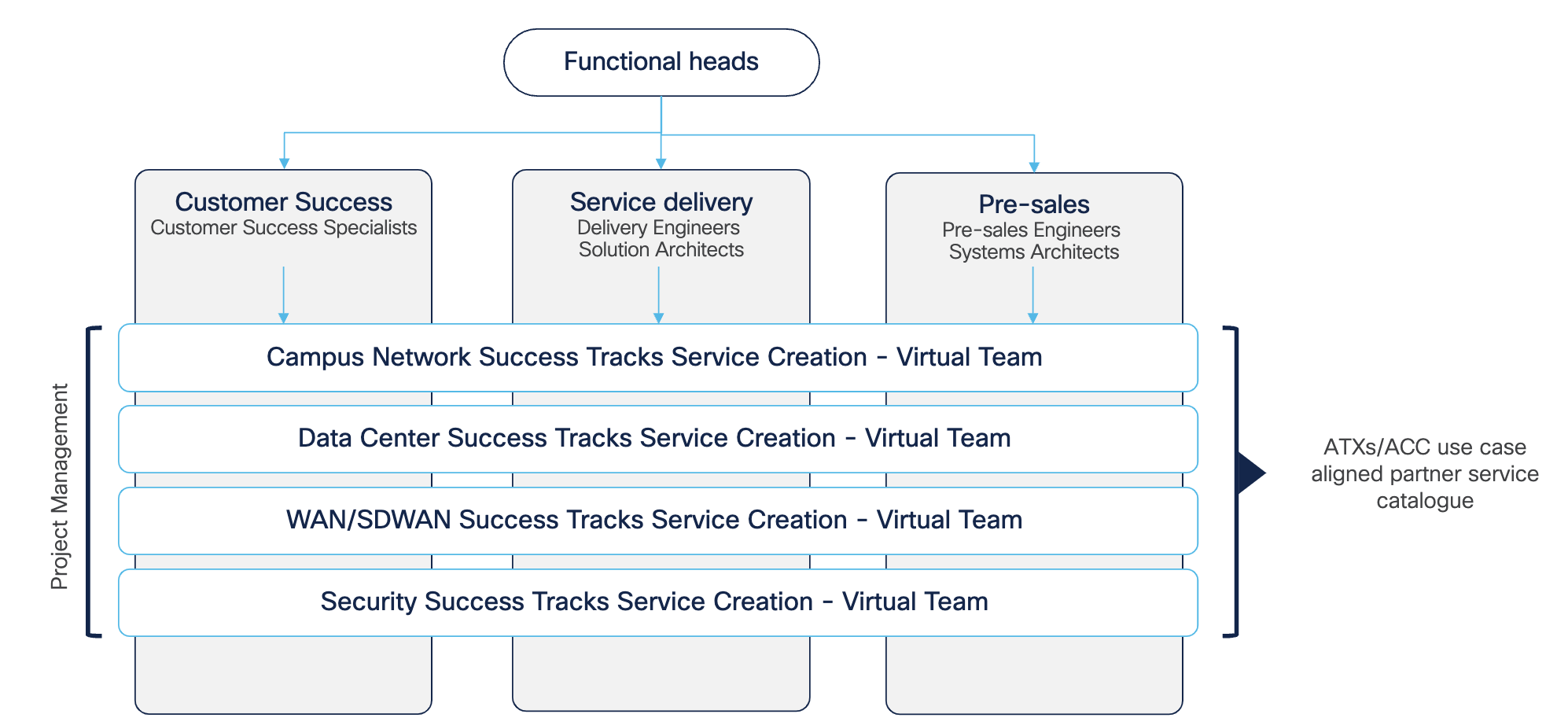
The first step was to create a partner cross-functional team of engineers, architects, delivery heads, and offerings team who could be engaged on this initiative. Given that there were multiple customer touch points from presales, delivery, support and customer success functions for the same customer, harnessing the collective the knowledge and experience of the entire team was a step in the right direction. Furthermore, different virtual teams was created for different architectures that composed of individuals from all the functions. Below shows the cross-functional team structure that was created within the partner firm during the course of the engagement.
Partner Engagement Methodology
The engagement with the partner lasted for around 12 weeks that involved interviews, assessments , ideation workshops and offer creation activities . The detailed engagement methodology can be found below. Significant amount of preparatory work was done during discovery, portfolio mapping and training that led to the most crucial activity of the engagement – the ideation workshop which lasts for about 3 hours.
The ideation workshop involved the architecture virtual teams to brainstorm service ideas for various customer verticals , personas(netops, devops, devops, coops), use cases, adoption stage, etc. In some partner workshops we saw close to 50 service ideas at the end of the workshop that was later filtered trough.

Further down, these ideas were grouped based on the service types. Then a technique called dot-voting was used to chose the ideas based on the number of participant votes each idea received.
Further downstream activities around service data sheet creation for the final list of ideas, partner branding and publishing were carried out depending on how fast the partner wanted to take these services to the market.
The Outcome
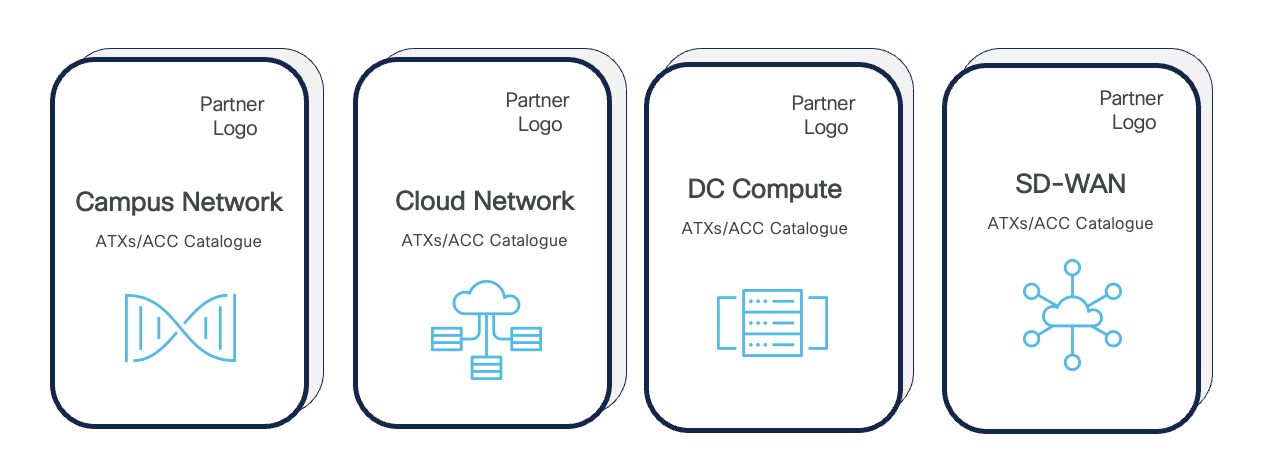
The key outcome was to enable each partner to build their branded service catalogue for each architecture. The catalogue would include partner differentiated services that can be delivered to their customers based on their need during the adoption phase of the product lifecycle.
Partners Customer Success Managers work with their customers IT stakeholders, identify their business and technical outcome and metrics and position relevant use cases. At this point, having this service catalogue handy and position relevant accelerators for the use cases chosen will provide a solution boost, demonstrating more value from the solution that their customers purchased.
Summary
As most people know, new customer acquisition is costly and strategies needs to be developed to retain existing customers by delivering value-based services aligned to specific use cases and customer outcomes. Cisco partners have knowledge of local market, customer needs and sentiments and are in a right position to create these service catalogues that helps improve product adoption and provides expansion opportunities.

 5layer Solutions
Leave a comment